Tip 1
No Japanese keyboard?
Just copy 旺.
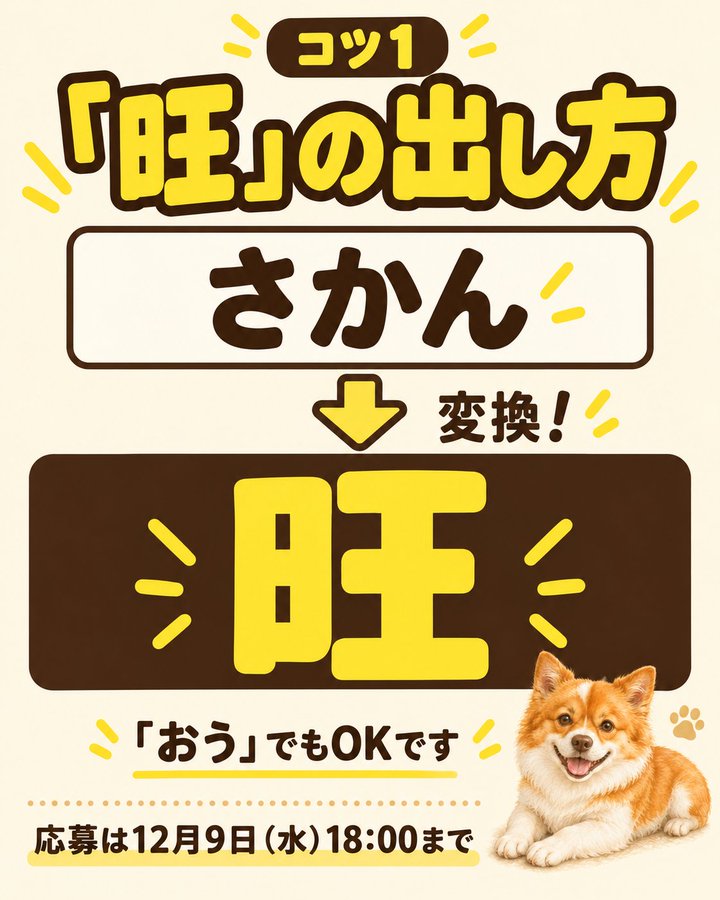
Tap the copy button and paste 旺 into 「世相を表す漢字一字」, the one-kanji field on the official form. With a Japanese keyboard, converting “さかん” or “おう” may also produce 旺.
A little guidance, one step at a time
Want to support Wangwang? This guide explains how to enter 旺, understand the sample reasons, and use the Japanese submission form. Take your time, or ask a Japanese-speaking friend to help.
旺 suggests flourishing or vigor. It is read “ō” in Japanese; “Wang” here refers to Wangwang’s name.

Before you begin
The official form is in Japanese. This page helps you copy the kanji, understand short sample reasons, and find the option not to enter the prize draw. You still make your own submission on the organizer’s website.
This is an independent guide to submitting a kanji for the 2026 “Kanji of the Year” campaign. It is not an official organizer website.
For supporters outside Japan
If you live outside Japan, choose 海外 (“Overseas”) for your residence and 希望しない (“No prize draw”). The official form stays in Japanese. Keep this guide open in another tab, or use your browser’s “Translate page” feature.
This is independent guidance, not a promise of acceptance. The organizer’s rules take priority. The deadline above uses Japan time; check your local time and the official announcement. Do not use a made-up address or another person’s details.
給居住在日本以外的支持者
只有本人居住在日本以外時,居住地才選擇「海外」(海外);獎品選項請選擇「希望しない」(不希望參加獎品抽獎)。官方表單仍使用日語。你可以在另一個分頁保留本指南,或使用瀏覽器的「翻譯頁面」功能輔助理解。
本頁是獨立編寫的指南,並不保證投稿會被接受;請以主辦方的規則為準。上方截止時間為日本時間,請核對你所在地的時間及官方公告。請由本人填寫並提交自己的真實資訊,不要使用虛假地址或他人的資訊,也不要代他人投稿或反覆提交同一漢字。
일본 밖에 거주하는 응원자분께
본인이 일본 밖에 거주할 때만 거주지에서 海外(해외)를 선택해 주세요. 경품 항목에서는 希望しない(경품 추첨 참여를 희망하지 않음)를 선택해 주세요. 공식 양식은 일본어로 되어 있어요. 이 안내를 다른 탭에 열어 두거나 브라우저의 ‘페이지 번역’ 기능을 사용하면 내용을 이해하는 데 도움이 돼요.
이 페이지는 독립적으로 작성한 안내이며, 응모 접수를 보장하지 않아요. 주최 측의 규정이 우선합니다. 위 마감 시각은 일본 시간 기준이므로 자신의 거주 지역 시간과 공식 공지를 확인해 주세요. 입력과 제출은 본인이 자신의 실제 정보로 직접 해 주세요. 가짜 주소나 다른 사람의 정보를 사용하지 마세요. 같은 「旺」을 여러 번 제출해도 표는 늘어나지 않아요.
Pour les personnes qui soutiennent Wangwang depuis l’étranger
Uniquement si vous vivez vous-même hors du Japon, sélectionnez 海外 (« À l’étranger ») pour votre lieu de résidence. Pour le tirage au sort, choisissez 希望しない (« Je ne souhaite pas participer »). Le formulaire officiel reste en japonais. Gardez ce guide ouvert dans un autre onglet ou utilisez la fonction « Traduire la page » de votre navigateur pour vous aider à comprendre.
Ce guide est indépendant et ne garantit pas l’acceptation de votre participation. Les règles de l’organisateur prévalent. La date limite ci-dessus est indiquée à l’heure du Japon ; vérifiez l’heure correspondante chez vous et l’annonce officielle. Saisissez et envoyez vous-même vos propres informations exactes. N’utilisez pas d’adresse fictive ni les informations d’une autre personne. Envoyer plusieurs fois le même kanji 旺 n’ajoute aucune voix.
Informations officielles sur la participation ↗ · FAQ officielle ↗
Für Unterstützerinnen und Unterstützer außerhalb Japans
Wählen Sie als Wohnort nur dann 海外 („Ausland“), wenn Sie selbst außerhalb Japans wohnen. Wählen Sie bei der Preisverlosung 希望しない („Keine Teilnahme an der Preisverlosung“). Das offizielle Formular bleibt auf Japanisch. Lassen Sie diese Anleitung in einem anderen Tab geöffnet oder nutzen Sie die Funktion „Seite übersetzen“ Ihres Browsers als Verständnishilfe.
Dies ist eine unabhängige Anleitung und keine Zusage, dass Ihr Beitrag angenommen wird. Die Regeln des Veranstalters haben Vorrang. Die oben genannte Frist gilt nach japanischer Zeit; prüfen Sie Ihre Ortszeit und die offizielle Bekanntmachung. Geben Sie Ihre eigenen, wahrheitsgemäßen Daten an und reichen Sie Ihren Beitrag selbst ein. Verwenden Sie keine erfundene Adresse oder die Daten anderer Personen. Mehrfache Einreichungen desselben Kanji 旺 erhöhen Ihre Stimmenzahl nicht.
Offizielle Hinweise zur Einreichung ↗ · Offizielle häufig gestellte Fragen ↗
Para quienes apoyan desde fuera de Japón
Si vives fuera de Japón, elige 海外 («Fuera de Japón») como lugar de residencia y 希望しない («No deseo participar en el sorteo»). La opción 海外 corresponde únicamente a quienes residen fuera de Japón. El formulario oficial sigue en japonés. Mantén esta guía abierta en otra pestaña o usa la función «Traducir página» del navegador para comprenderlo.
Esta es una guía independiente, no una garantía de aceptación. Prevalecen las normas de la organización. La fecha límite indicada arriba corresponde a la hora de Japón; comprueba la hora en tu lugar de residencia y el anuncio oficial. Introduce y envía tú mismo tus propios datos reales. No uses una dirección inventada ni los datos de otra persona, ni envíes participaciones en nombre de otras personas. Enviar varias veces el mismo kanji 旺 no aumenta los votos.
Información oficial para participar ↗ · Preguntas frecuentes oficiales ↗
Per chi ci sostiene da fuori del Giappone
Solo se vivi fuori dal Giappone, scegli 海外 («Estero») come luogo di residenza e 希望しない («Non desidero partecipare all’estrazione dei premi») nella sezione dei premi. Il modulo ufficiale resta in giapponese. Tieni aperta questa guida in un’altra scheda, oppure usa la funzione «Traduci pagina» del browser per aiutarti a capire.
Questa è una guida indipendente, non una garanzia di accettazione. Le regole dell’organizzatore hanno la precedenza. La scadenza indicata sopra è espressa nell’ora del Giappone: controlla l’orario corrispondente nel luogo in cui vivi e l’annuncio ufficiale. Compila e invia personalmente la proposta con i tuoi dati reali. Non usare un indirizzo inventato o i dati di altre persone, né inviare proposte per conto altrui. Inviare più volte lo stesso 旺 non aumenta i voti.
Informazioni ufficiali sull’invio ↗ · Domande frequenti ufficiali ↗
Submission tips
The written instructions explain the Japanese illustrations. You do not need to read the text inside the images.
Tip 1
Tap the copy button and paste 旺 into 「世相を表す漢字一字」, the one-kanji field on the official form. With a Japanese keyboard, converting “さかん” or “おう” may also produce 旺.
Tip 2
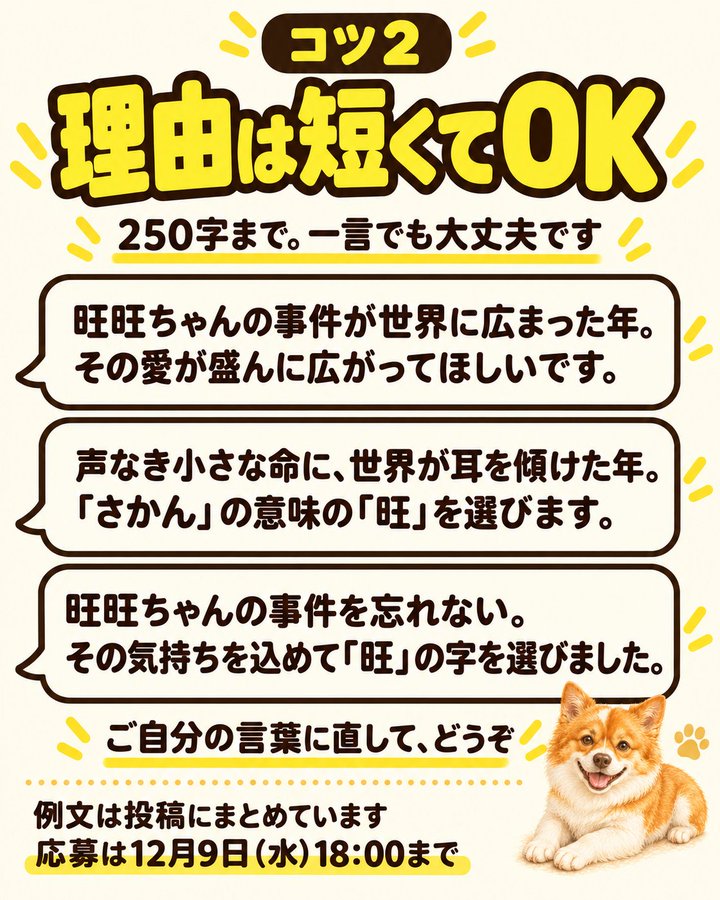
The reason field allows up to 250 characters, not 250 words. The Japanese samples below are about 40 characters each. Their English explanations help you understand what you are copying.
Please adapt a sample to your own words and genuine experience rather than submitting it unchanged.
旺旺ちゃんの話をきっかけに、動物の苦しみに関心を持った今年。その思いを「旺」に込めます。
今年は愛犬との暮らしに何度も励まされました。命が元気に輝く様子から「旺」を選びます。
「旺」は私にとって学ぶ意欲の一字です。今年、動物の福祉について読む機会が増えました。
保護された犬が安心して眠る姿に心が和みました。「旺」に、命を支える活動の発展を願います。
散歩の時間が家族との会話を増やしてくれた一年でした。豊かな日々への感謝を「旺」で表します。
Tip 3
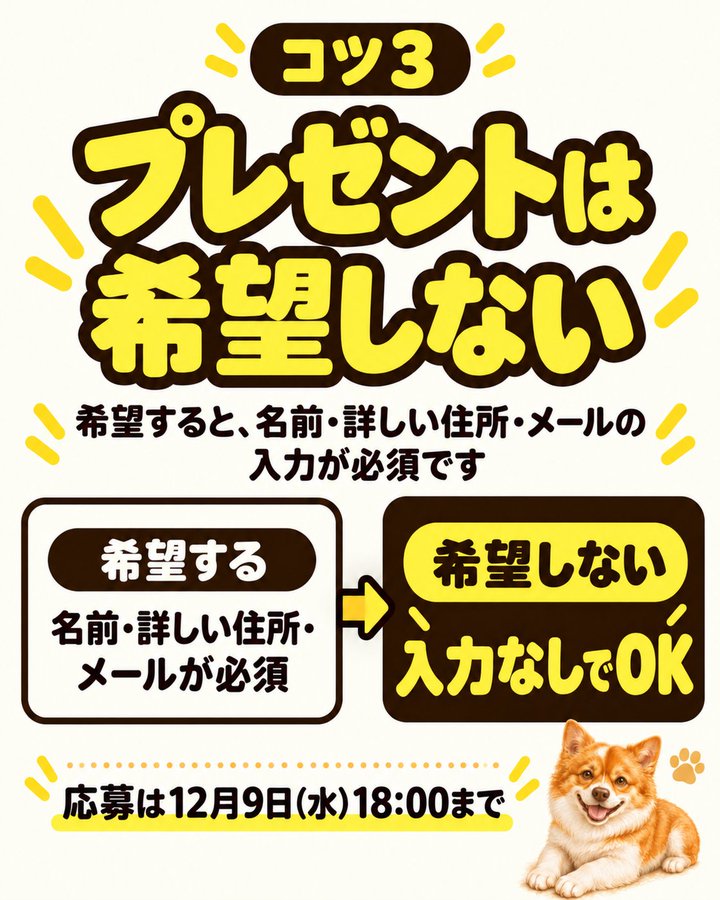
If you do not want to provide a prize delivery address, choose 「希望しない」 (“Do not wish to enter”) in the prize section. This does not remove the other required fields.
Ready when you are
This site does not receive your submission. Open the official form and enter your own information. The form stays in Japanese; our English guide does not translate or submit it for you.

Some illustrations are from posts by Yoshiro Ohmori @cainarita. See this post for information about using the images.